
Baccarat has always been a game with a clear table structure. Players place chips on Banker, Player, Tie, Pair or other betting areas. The dealer follows the card-dealing process, announces the result and completes collection or payout.
From the player’s side, this process looks simple.
For casino operators, however, every round involves many details that need to be controlled accurately. Chips move from the chip tray to players, from players to betting areas, from losing bets back to the tray, and from the tray to winning players during payout. At the same time, the table team must record who placed the bet, how much was placed, which betting area was used, what the result was, and whether the final collection or payout was correct.
This is where a smart baccarat table becomes valuable.
A smart baccarat table is not only a physical gaming table. It can become a data-connected table operation system that links RFID chips, player betting records, card result recognition and payout verification into one controlled process.
CTSOK develops a mature casino management system designed for casino table game operations. In baccarat scenarios, the system connects RFID chip recognition, dealer-side operation control, player ID records, AI card recognition, automatic result calculation and payout verification to support clearer table management.
Why Baccarat Table Operations Need Better Visibility
Traditional baccarat table operations depend heavily on manual procedures. Dealers, supervisors and surveillance teams work together to maintain accuracy, but manual observation still has limitations.
A table may look calm from the outside, but several things are happening at the same time:
- Players exchange chips before entering the game.
- Chips are placed across different betting areas.
- Multiple seats may participate in one round.
- The dealer collects losing bets.
- Winning bets must be paid according to the game result.
- The chip tray balance needs to remain accurate.
- The casino needs records for audit, player tracking and internal review.
When the table is busy, small errors can become difficult to trace. A missed chip, an incorrect payout, a wrong manual entry or an unclear betting record can create extra work for the floor team.
Smart table technology is designed to reduce this uncertainty. Instead of relying only on visual checking and manual records, the table itself can help capture operational data during the game.
From Chip Tray to Table: RFID Chips as the Data Starting Point
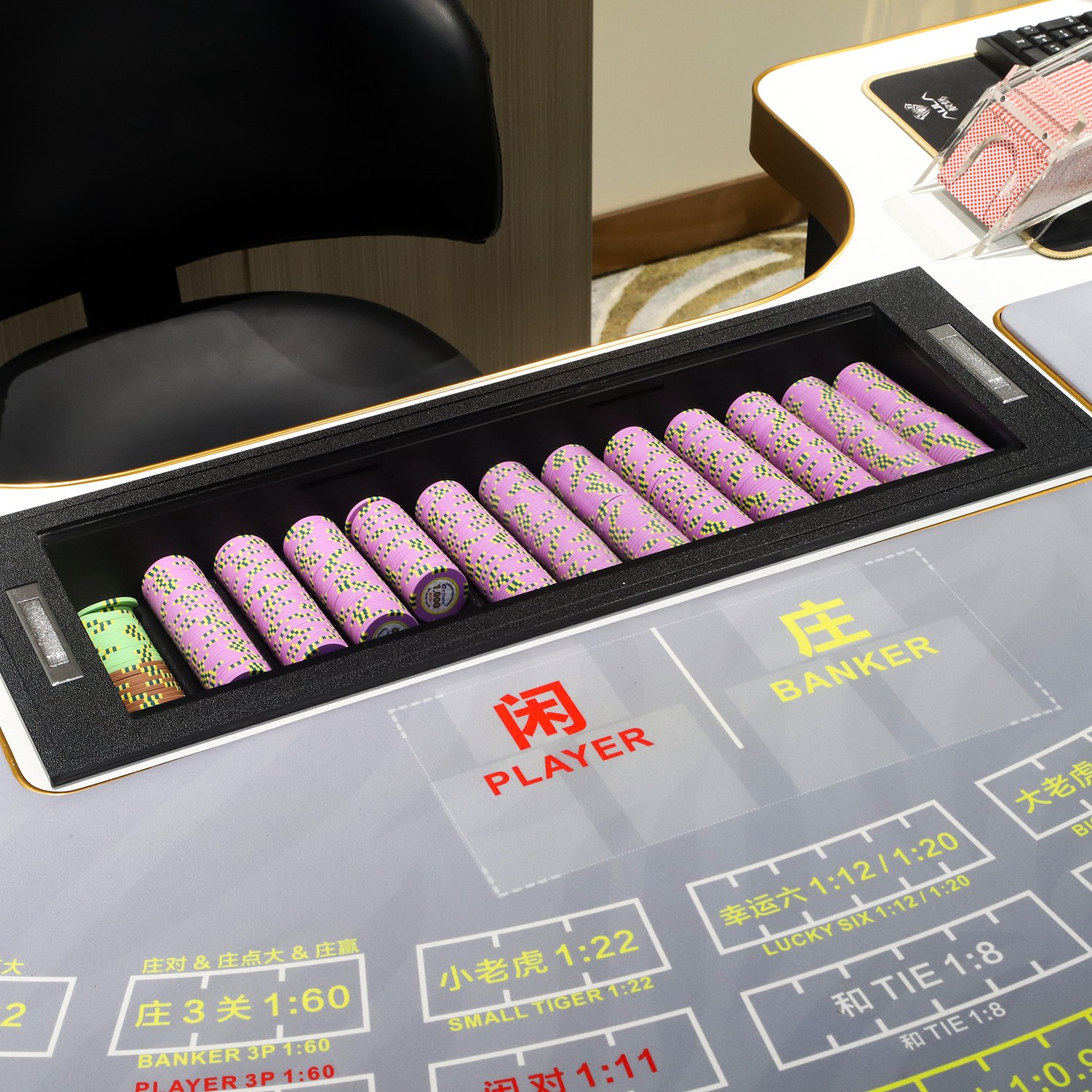
The first layer of a smart baccarat table system is chip visibility.
With RFID casino chips, each chip can carry an identifiable digital signal. The system can recognize chip value, quantity and movement when the chips are placed in supported reading areas.
This matters because chip management is not limited to anti-counterfeiting. In a table game environment, RFID chips can support a more complete operational workflow.
For example, the system can help identify:
- How many chips are in the chip tray
- What denominations are currently available
- Whether chips have been removed from the tray
- Whether chips have been returned correctly
- What value of chips is placed in a betting area
- Whether the final collection or payout matches the system calculation
This turns chips from passive objects into trackable assets inside the casino floor operation.
In practical table management, this is especially useful during opening checks, shift handovers, inventory reviews and game-round verification. The casino does not need to rely only on manual counting for every detail. The system can provide a clearer reference for the floor team.
Connecting Player Bets with Table Data
A smart baccarat table becomes more powerful when RFID chips are linked with player betting records.
In a traditional process, the casino may know the table result, but it may not always have a structured digital record of each player’s betting behavior for every round. A smart table can help close this gap.
A player can be associated with an ID before or during the game. When chips are exchanged, the system can record the player ID, chip value and quantity. When the player places chips on the table, the betting area can be recognized through the table’s RFID sensing structure.
This creates a connection between three important data points:
- Who placed the bet
- Where the bet was placed
- How much was placed
For baccarat operations, this is very useful. The system can record whether a player bet on Banker, Player, Tie, Pair or other supported betting areas. It can also record the chip value placed by that player in that round.
This does not change how the player experiences the game. The player still uses physical chips and plays at a real baccarat table. The difference is that the table operation behind the scene becomes more structured and traceable.
AI Card Recognition and Automatic Result Calculation
After bets are placed, the next key part is game result recognition.
In baccarat, the result depends on the cards dealt to Banker and Player. In a manual process, the dealer announces the result and the table team follows the payout rules. In a smart baccarat table system, AI card recognition can assist the process by identifying the cards and calculating the result automatically.
The system can recognize the card information, calculate the baccarat points, determine the winning side and connect that result with the recorded betting data.
This helps reduce errors such as:
- Incorrect manual result entry
- Misread card values
- Missed round records
- Unclear dispute review
- Delayed settlement confirmation
For the casino, the value is not only speed. The more important value is consistency. Each round can be supported by a digital record that connects cards, bets, players and settlement information.
Payout Verification: The Most Important Step After the Result
Many smart table discussions focus only on bet recognition. However, payout verification is equally important.
After the result is confirmed, the dealer must collect losing bets and pay winning bets. This is where operational mistakes can happen. A dealer may collect the correct amount, overpay a winner, underpay a winner or need supervisor confirmation.
A smart baccarat table system can help verify the collection and payout process.
For example, if the system calculates that a losing bet should be collected, it can compare the expected collection amount with the actual chips collected. If a winning player should receive a certain payout, the system can compare the expected payout amount with the actual chips placed in the payout verification area.
This creates a simple but important control logic:
StepSystem CheckLosing bet collectionExpected collection vs. actual collectionWinning bet payoutExpected payout vs. actual payoutPlayer settlementPlayer ID, bet amount and result matchedRound completionCollection and payout confirmed before closing the round
This is a major difference between a basic RFID table and a more complete casino management system. The system is not only reading chips. It is helping verify whether the table operation matches the game result.
For casino operators, this can reduce payout mistakes, improve supervisor review efficiency and provide clearer records when a round needs to be checked later.
Dealer-Side Operation Control
A smart baccarat table also needs a dealer-side operation terminal.
The dealer terminal is where the table operation is started, controlled and confirmed. It can support steps such as login, table opening, chip exchange, game start, round confirmation, result review, collection verification and payout verification.
This is important because a smart system should not interrupt normal table work. The technology needs to fit into the dealer’s workflow.
A good dealer-side interface should make the process clear:
- What step is currently active
- Which player has exchanged chips
- Which bets have been detected
- What result has been recognized
- How much should be collected
- How much should be paid
- Whether the round can be completed
This helps standardize the table process without forcing the casino to change the basic baccarat experience.
Why This Matters for Casino Management
A smart baccarat table does more than improve one table. It creates data that can support the wider casino management system.
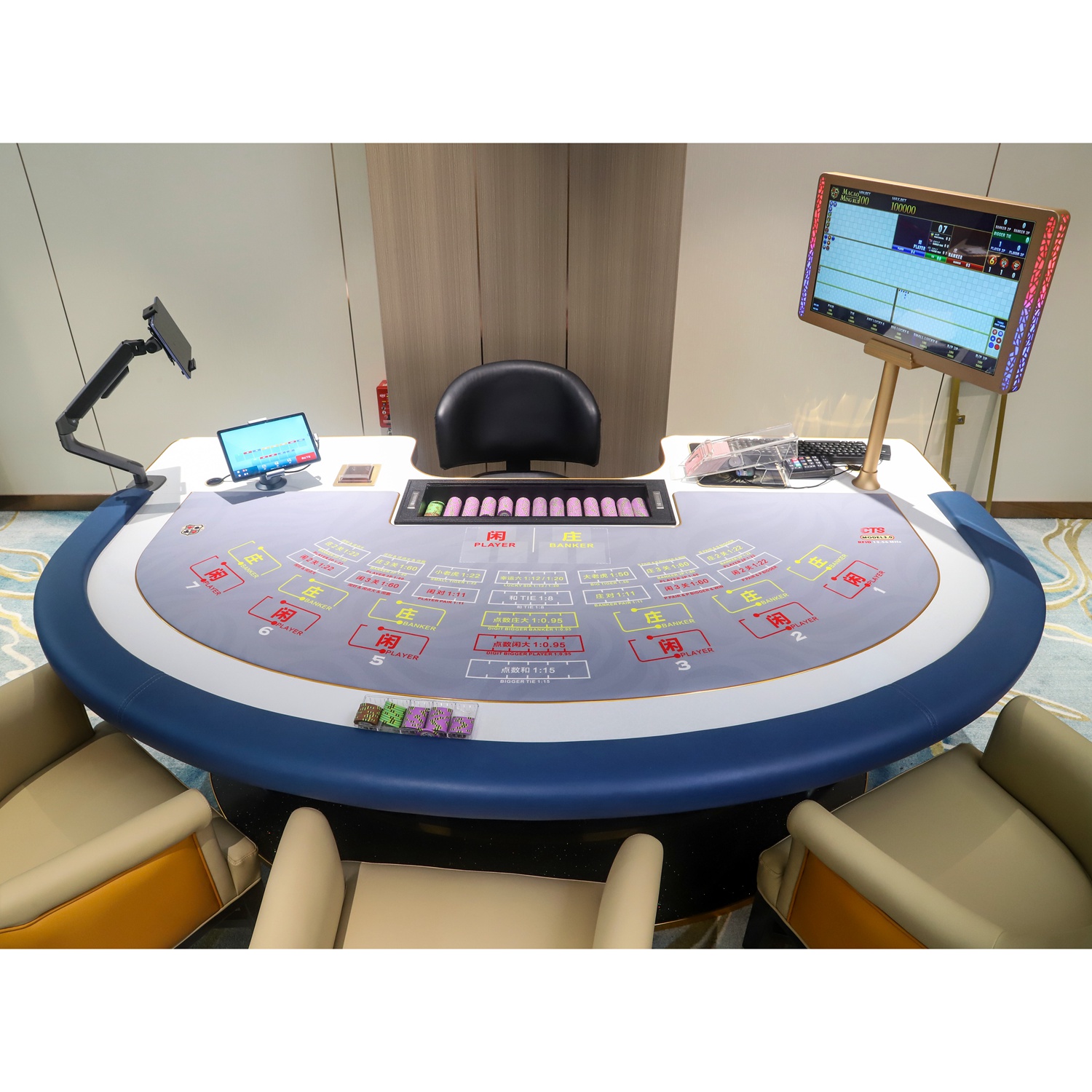
When each round is recorded with chip data, player data, bet data, result data and payout data, the casino can gain a clearer view of table operations.
This can support:
- Table performance review
- Player betting records
- Chip movement visibility
- Dealer operation review
- Shift handover checking
- Internal audit support
- VIP room management
- Risk control and abnormal behavior review
For casino management teams, the main benefit is not simply automation. The value is visibility.
A casino floor has many moving parts. When table data becomes clearer, managers can make better decisions and reduce blind spots in daily operations.
A More Complete Smart Baccarat Table Structure
A complete smart baccarat table solution usually includes several connected parts:
System ComponentFunctionRFID chipsIdentify chip value and support chip trackingRFID chip trayMonitor chip inventory and tray balanceSmart baccarat tableRead betting areas and chip placementDealer terminalGuide table operation and settlement stepsPlayer ID systemConnect chip exchange and betting recordsAI card recognitionRecognize cards and calculate resultsPayout verification areaCheck expected payout against actual payoutBackend CMSStore records and support management review
When these parts work together, the table becomes more than a gaming surface. It becomes a connected control point within the casino operation.
CTSOK’s smart baccarat table solution is built around this type of connected structure. Its smart baccarat table can work with RFID chips, dealer-side controls and CMS data management to support baccarat table visibility from chip inventory to final payout.
Smart Tables Should Support, Not Replace, Casino Staff
It is important to understand that smart baccarat tables are not designed to replace dealers or supervisors.
The dealer still manages the game. Players still place physical chips. Supervisors still oversee table operations. The difference is that the system provides an additional data layer to support the team.
This data layer can help answer important operational questions:
- Were the chips counted correctly?
- Which player placed the bet?
- Which betting area was used?
- What was the round result?
- Was the losing bet collected correctly?
- Was the winning payout correct?
- Can the round record be reviewed later?
For modern casino operations, this type of traceability is becoming more valuable.
Conclusion
Baccarat remains a physical table game, but the management behind the table is becoming more digital.
A smart baccarat table connects the key parts of the game: RFID chips, player bets, card results, dealer operations and payout verification. Instead of treating these steps as separate manual actions, the system links them into one table management workflow.
For casino operators, this can improve chip visibility, reduce settlement errors, support player bet records and provide clearer data for floor management.
CTSOK’s mature casino management system is designed for this type of table operation. By integrating RFID chip tracking, smart baccarat table recognition, AI card recognition and payout verification, CTSOK helps casinos build a more visible and controlled baccarat table environment.
To learn more, visit the CTSOK casino management system and smart table solutions.