Casino table games are one of the most recognizable parts of a live casino floor. Unlike slot machines or fully digital games, table games are played around a physical table. Players place chips on marked areas, follow the dealer or croupier, and watch the game round happen directly in front of them.
Blackjack, baccarat and roulette are three classic examples of casino table games. They are often placed in the same broad category, but they do not work in the same way. Each game has its own table shape, betting structure, equipment and dealer procedure.
A blackjack table is designed around individual player decisions.
A baccarat table is designed around Player, Banker and Tie betting areas.
A roulette table is designed around a wheel, numbered layout and many betting combinations.
Understanding these differences helps explain why casino table games need specialized table designs instead of one universal table for every game.
What Are Casino Table Games?
Casino table games are live games played on a physical gaming table. They usually involve a dealer or croupier, gaming chips, a printed layout and game equipment such as cards, dice, a wheel, a card shoe or a chip tray.
Many casino venues group blackjack, baccarat, roulette, craps and poker-based games under the table games category. These games are different in rules and pace, but they share one feature: the table layout is part of how the game works.
The table is not only a surface. It tells players where to place chips, helps the dealer manage the round and gives floor staff a clear view of the game.
For this reason, a casino table must support the actual game process. It needs enough space for player positions, dealer movement, chip handling and equipment placement. If the table layout is unclear, the game can become harder to follow, slower to run and less comfortable for both players and dealers.
Why Different Table Games Need Different Tables
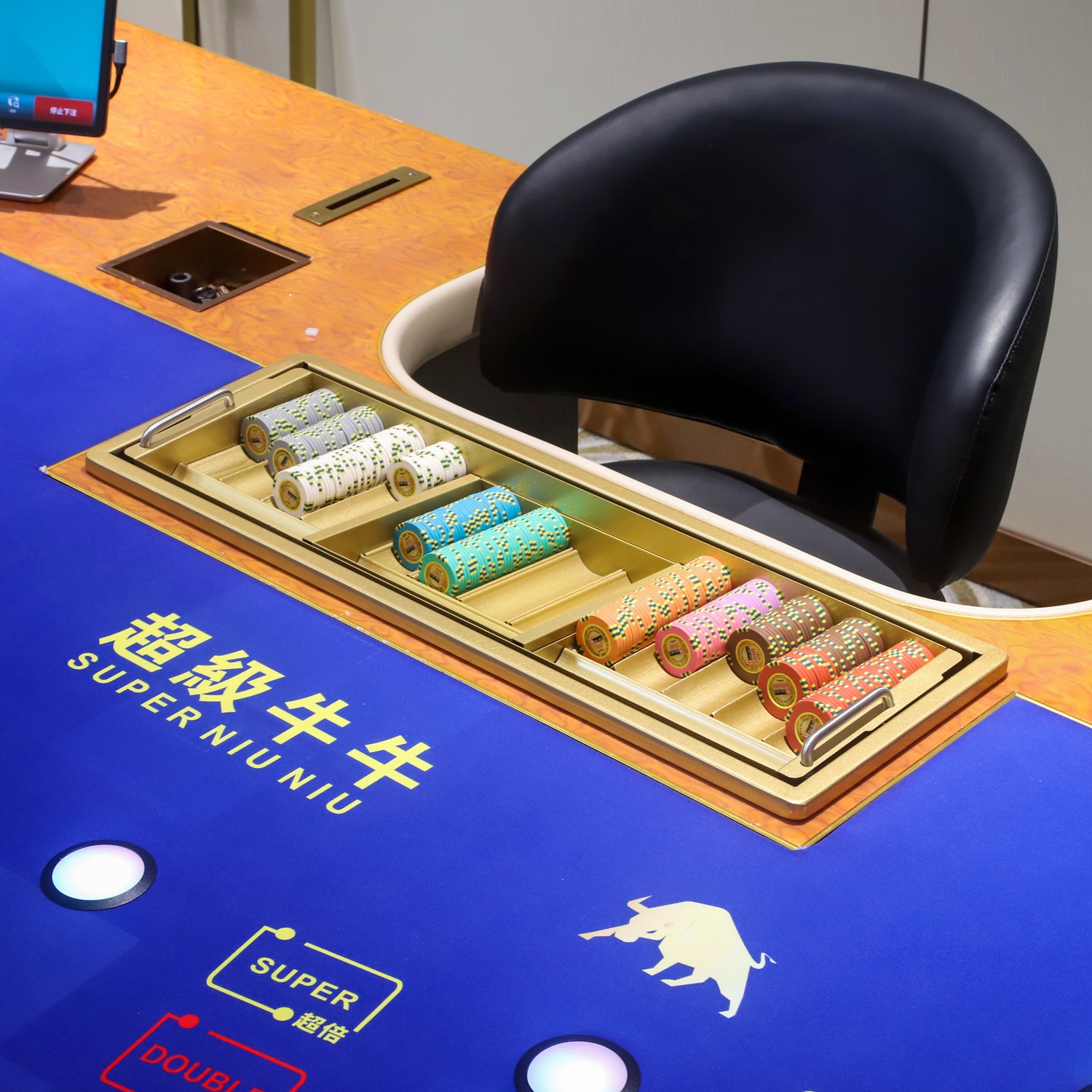
At first glance, many casino tables may look similar. They often have padded rails, printed felt, chip trays and a dealer area. But the details are very different because each game creates a different type of action.
A blackjack table needs separate player betting positions because each player plays an individual hand against the dealer.
A baccarat table needs clear Player, Banker and Tie areas because players are betting on which hand will finish closer to nine.
A roulette table needs a large numbered betting grid and enough space for the wheel because players can place chips on single numbers, number groups, colors and other betting sections.
These design differences are not random. They come from the rules and workflow of each game.
A table game with many player decisions needs a layout that keeps each hand easy to read. A card comparison game needs simple and clear betting zones. A wheel game needs space for both the wheel and the betting layout.
That is why table design is part of the game itself.
Blackjack Table: Built Around Player Decisions
Blackjack is one of the best-known casino card games. The basic goal is to get a hand value closer to 21 than the dealer without going over 21. Number cards keep their face value, face cards count as 10, and an ace can count as either 1 or 11 depending on the hand.
The special feature of blackjack is that players make decisions during the round. After receiving cards, a player may choose to hit, stand, double down, split a pair or take insurance, depending on the table rules.
Because of these decisions, a blackjack table normally needs clear individual betting positions. Each player must have enough space for the original wager and any additional wager created by a split or double down.
Most blackjack tables use a curved or semi-circular player side. This shape allows several players to sit around the table while keeping the dealer at the center. The dealer side usually includes space for a chip tray, card shoe, discard tray and payout area.
From a table design perspective, blackjack is not only about dealing cards. It is about keeping several player hands organized at the same time.
A good blackjack table should make it easy to see:
- which bet belongs to which player;
- where the dealer should place cards;
- where the card shoe and discard tray are positioned;
- how chips are collected and paid out;
- whether additional wagers such as split or double down are clearly separated.
This is why the blackjack table layout has to balance player comfort, dealer reach and hand visibility.
Baccarat Table: Built Around Player, Banker and Tie
Baccarat works differently from blackjack. In baccarat, players do not build their own hands one by one against the dealer. The game is based on two main hands: Player and Banker. Before the cards are dealt, players usually bet on Player, Banker or Tie. The winning side is the hand closer to nine.
This makes the baccarat table layout different from a blackjack table.
The main focus of a baccarat table is not individual player hand decisions. Instead, the layout must clearly show the main betting areas. A standard baccarat layout usually includes Player, Banker and Tie sections. Depending on the game version, it may also include pair bets, bonus bets or other side wager areas.
Baccarat is especially common in Asian casino environments, and different venues may use different table styles. Traditional baccarat tables are often larger and more formal. Mini baccarat tables are usually more compact. Some venues may also use no-commission baccarat, squeeze baccarat or speed baccarat layouts.
The table design follows the game format. Since baccarat players usually place their bets before the deal and do not make hit-or-stand decisions like blackjack players, the table layout focuses more on bet clarity, card visibility and smooth settlement.
Baccarat tables may also use equipment such as:
- card shoe;
- chip tray;
- discard tray;
- printed felt layout;
- result display or roadmap display.
Roadmap displays are especially common around baccarat because many players like to follow previous hand results when watching the table.
Roulette Table: Built Around the Wheel and Number Layout
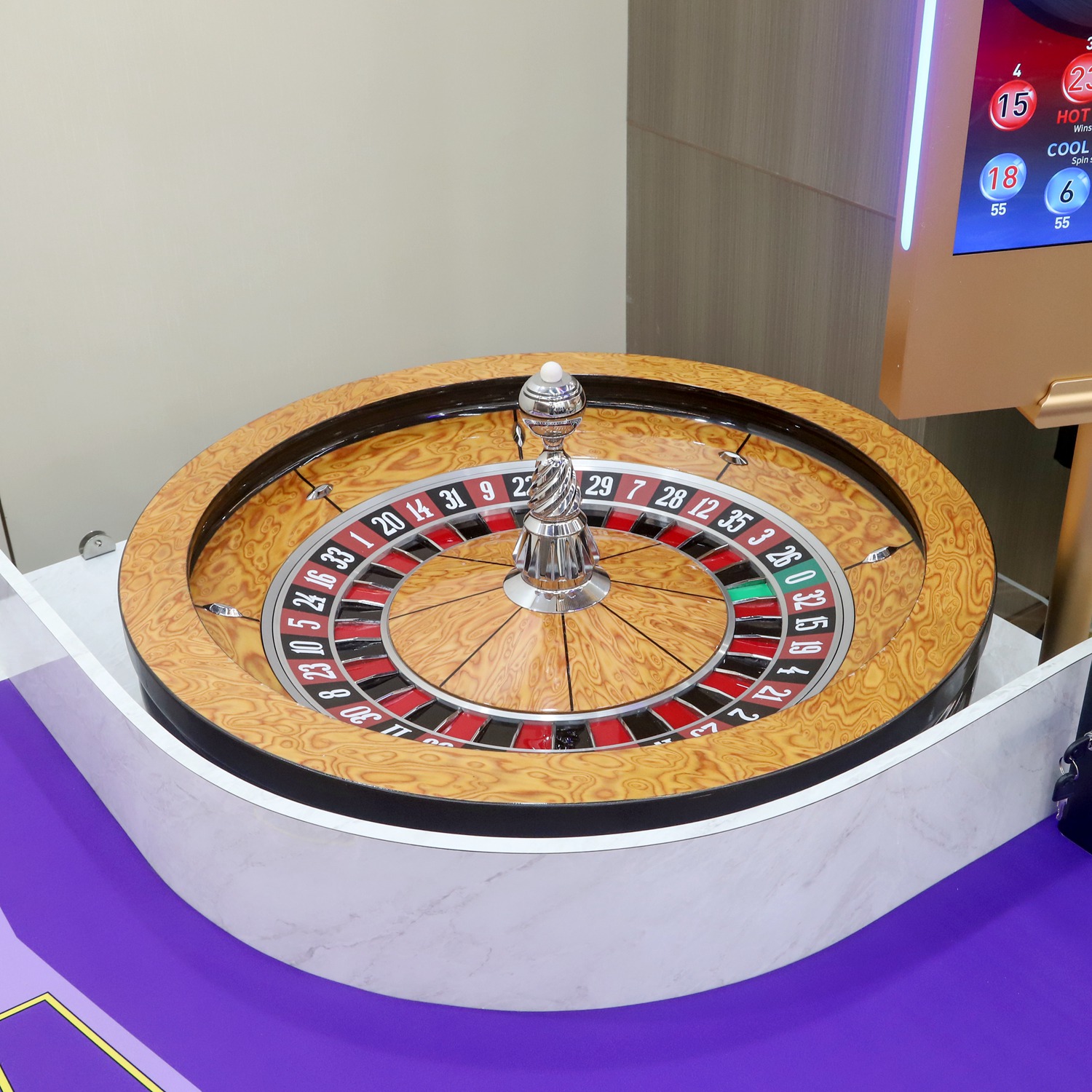
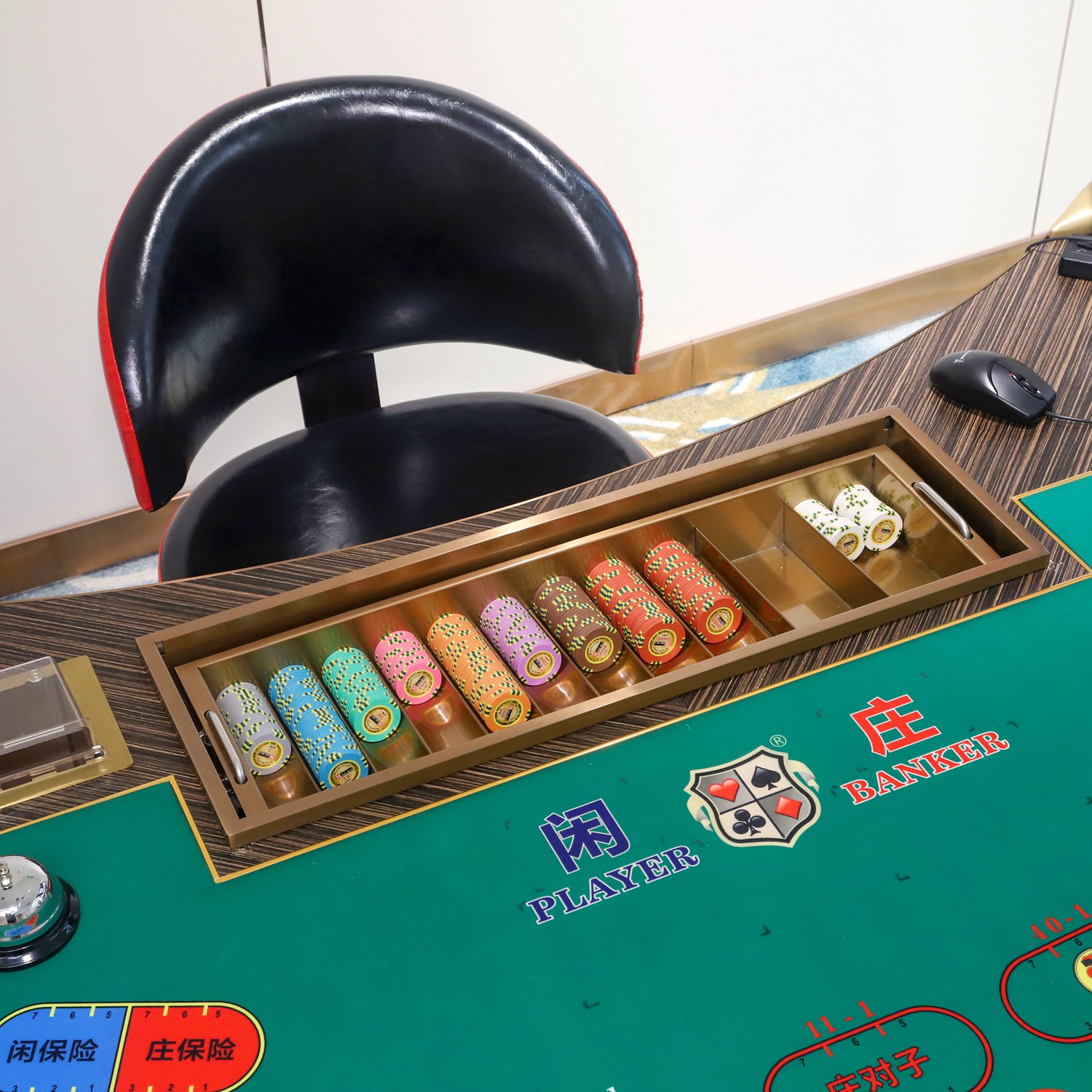
Roulette is different from both blackjack and baccarat because it is not a card game. It uses a wheel, a ball and a numbered betting layout.
Players place chips on numbers, groups of numbers, colors or other betting sections before the croupier spins the wheel. After the ball lands in a numbered pocket, the croupier settles the winning and losing bets.
A roulette table is usually divided into two main parts: the wheel area and the betting layout.
The betting layout includes numbered spaces and outside betting areas. Inside bets focus on specific numbers or small number groups. Outside bets cover broader categories such as red or black, odd or even, high or low numbers, columns and dozens.
Compared with blackjack and baccarat, roulette needs much more printed betting space. A single round can include many different chip placements across the layout. The croupier must be able to read these wagers clearly and settle them accurately.
Roulette wheels also vary by format. A European-style roulette wheel has a single zero, while an American-style roulette wheel includes both zero and double zero.
This difference affects the wheel, the layout and the game presentation.
For roulette, the table is not built around player decisions after the round begins. Once bets are placed and the wheel is spun, the result depends on where the ball lands. That is why roulette table design focuses heavily on layout clarity, wheel visibility and chip placement.
Blackjack Table vs Baccarat Table vs Roulette Table
Although blackjack, baccarat and roulette all belong to casino table games, their table structures are very different.
Table TypeMain Game LogicKey Layout FeatureCommon EquipmentBlackjack TablePlayers make decisions against the dealerIndividual betting positionsCards, card shoe, discard tray, chip trayBaccarat TablePlayers bet on Player, Banker or TieMain betting zones for each wager typeCards, shoe, chip tray, roadmap displayRoulette TablePlayers bet on numbers or groups before the wheel resultNumbered betting grid and wheel areaRoulette wheel, ball, layout cloth, roulette chips
The main point is simple: the table must match the game.
Blackjack needs player-by-player organization.
Baccarat needs clear betting zones.
Roulette needs a large numbered betting layout and wheel space.
This is why casinos do not use one generic table for all table games.
What Casino Table Layouts Tell Players
A good table layout gives players information before the game even starts.
On a blackjack table, betting circles show where players should place their main wagers.
On a baccarat table, Player, Banker and Tie sections show the main betting choices.
On a roulette table, the numbered grid and outside betting areas show how different wagers are placed.
For beginners, the layout reduces confusion. For dealers, it supports a consistent game procedure. For casino operators, it makes the table easier to observe and manage.
A clear layout can make the game feel more organized. A crowded or poorly marked layout can make chips harder to read and slow down the game.
This is why casino table design should not be treated as decoration only. It is part of how the game runs.
Table Equipment Used in Live Casino Games
Casino table games also rely on different types of equipment.
Blackjack commonly uses cards, a card shoe, a discard tray, a chip tray and marked betting positions. Some blackjack tables may also include side bet areas depending on the venue’s rules.
Baccarat commonly uses cards, a shoe, chip trays and a table layout for Player, Banker, Tie and optional wagers. In many modern venues, baccarat tables may also use result displays or roadmap screens.
Roulette uses a wheel, ball, layout cloth, roulette chips and a croupier marker. The table must provide enough space for both the wheel and the betting grid.
The equipment used on each table is closely connected to how the game is played. A card shoe is important for card games. A wheel is essential for roulette. A printed layout is essential for all three because it organizes betting and settlement.
Why Table Design Matters in Commercial Casino Use
In a home game or casual setting, a table may only need to look good. In a commercial casino environment, the table needs to perform under repeated daily use.
Players place and move chips throughout the game. Dealers work from the same position for long periods. Floor staff need to observe multiple tables. The felt layout must remain readable under casino lighting. The table frame, rail, base and surface must withstand constant use.
This makes table design a practical issue.
A blackjack table with poor player spacing may make betting areas crowded.
A baccarat table with unclear markings may slow down settlement.
A roulette table with a cramped betting layout may make chip placement harder to read.
The best table design is usually not the most complicated one. It is the one that fits the game process clearly.
Choosing the Right Table for the Right Game
For venues planning live casino table games, the first question should not only be how the table looks. The more important question is how the table supports the game.
A blackjack table should support multiple player decisions and clear individual betting positions.
A baccarat table should support main wager visibility and smooth card dealing.
A roulette table should support accurate chip placement across a wide betting layout and clear wheel operation.
This is where professional casino table design becomes important. A commercial table needs to be designed around real game flow, not only appearance. Layout printing, table size, rail comfort, dealer-side equipment placement and customization options all affect how the table performs in daily use.
CTSOK provides commercial table solutions for live casino environments, including blackjack tables and baccarat tables designed around dealer workflow, player positions and gaming equipment needs.
For venues that need customized casino table games equipment, the right table format can help make the game easier to operate, easier to understand and more consistent on the floor.
Final Thought
Casino table games are not all the same.
Blackjack, baccarat and roulette may all belong to the same broad category, but each one needs a different table structure because each game works differently.
A blackjack table is shaped by player decisions.
A baccarat table is shaped by Player, Banker and Tie betting.
A roulette table is shaped by the wheel and numbered betting layout.
Once these differences are clear, it becomes easier to understand why table design is such an important part of live casino games.
The table is not only where the game happens. It is the structure that makes the game readable, playable and manageable.