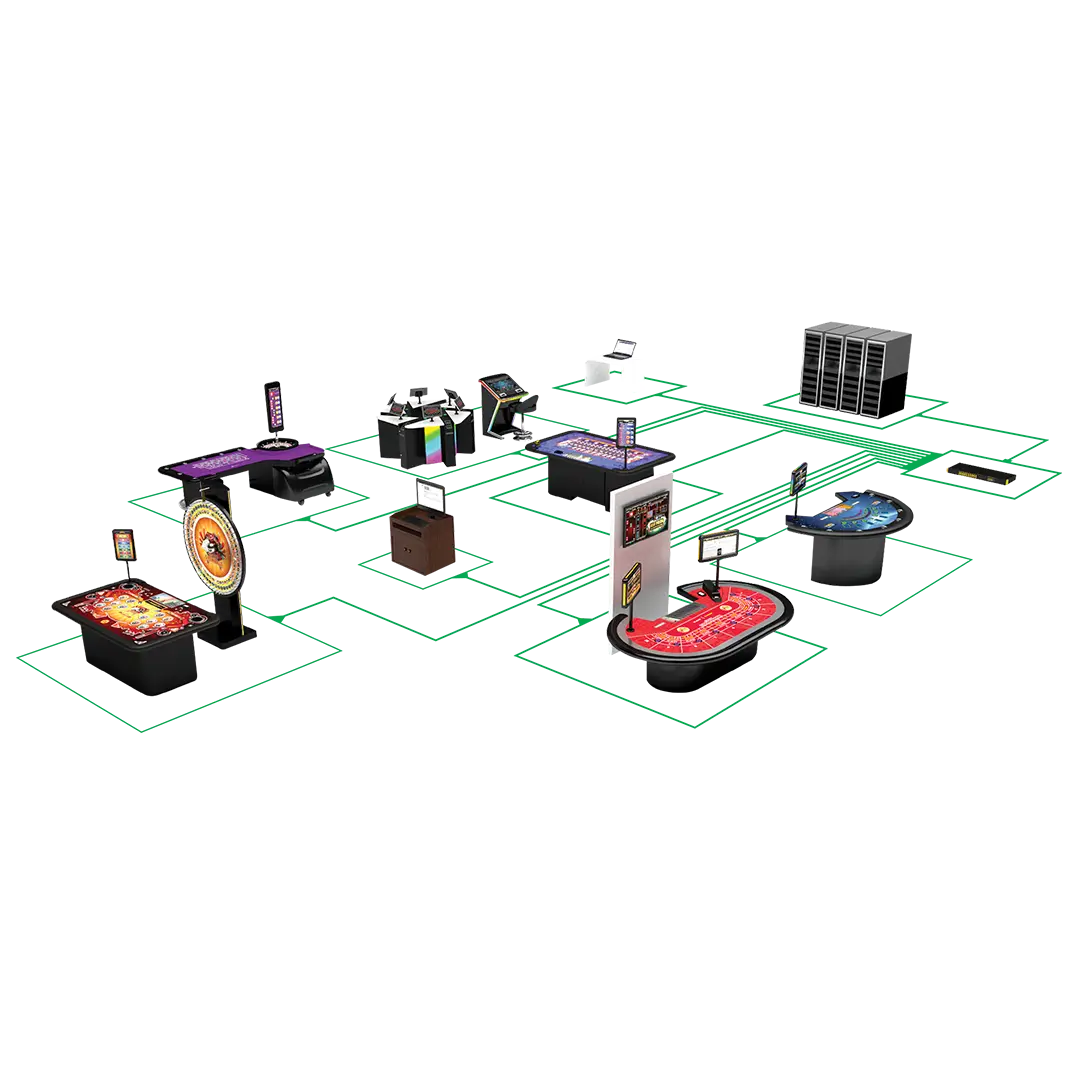
A baccarat table may have cards, chips, a dealer terminal and one or more screens displaying previous results. Because several electronic devices are present, it is easy to assume that the table is already connected to a complete casino management system.
In practice, a baccarat roadmap display and a casino management system perform very different jobs.
The display communicates completed game results to players and table staff. The management system organizes the wider operational context surrounding the table.
Understanding this difference helps operators avoid expecting one piece of equipment to perform functions it was never designed to provide.
What Does a Baccarat Roadmap Display Show?
A baccarat roadmap display presents a visual history of completed game results.
Depending on the display software and configuration, it may show familiar baccarat road formats such as:
- Bead Plate;
- Big Road;
- Big Eye Boy;
- Small Road;
- Cockroach Pig.
These formats organize previous Player, Banker and Tie results in different visual structures. They help players and staff view the recorded history of the current shoe, but they do not predict future results or change the mathematical independence of the next hand.
A compatible display may receive a completed result from an electronic card shoe, dealer terminal or another connected source. The screen then updates the relevant road formats according to its configured display logic.
A modern baccarat roadmap display may use single-sided or double-sided screens, different mounting structures and customized interfaces to suit the table layout.

The roadmap display presents completed baccarat results in visual road formats. Image: CTSOK.
What the Display Does Not Manage
Displaying a result is not the same as managing the table.
A roadmap display does not normally maintain the complete operational records required to answer questions such as:
- Which dealer is assigned to the table?
- Which user corrected a result?
- Is the RFID reader connected?
- What chip inventory is assigned to the table?
- Which player is associated with a gaming position?
- Is an operational exception awaiting approval?
- When was the table opened or closed?
- Which user has permission to change a record?
The display may be one visible part of the table environment, but it should not be treated as the central source of every table-management record.
What Does a Casino Management System Add?
A casino management system provides a broader operating structure.
It can register the table as a defined operational unit and associate compatible devices, users and records with that table.
Depending on the installed modules, the system may organize information relating to:
- Gaming tables and current status;
- Dealers, supervisors and shifts;
- RFID chips and table inventory;
- Identified players;
- Recorded table activity;
- Electronic card shoes;
- Results and approved corrections;
- User permissions;
- Operational alerts;
- Historical reports.
A connected casino management system may receive information from different devices, but the system still needs to identify where the information came from and what status it has.
For example, a card recognized by an electronic shoe, a result calculated from those cards and a correction approved by a supervisor are three related but different records.
The management platform provides operational views beyond the results shown on a baccarat roadmap display. Image: CTSOK.
They May Use the Same Result but Serve Different Users
The roadmap display and management platform may both receive information about the same baccarat result.
However, they present that information for different purposes.
The player-facing display may show that the completed result was Banker and update the corresponding road formats.
The dealer interface may show the active game and operating prompt. A supervisor view may show that the result was corrected. The management record may preserve the table, time, device and authorized user associated with that correction.
The visible result may be the same, but the surrounding information is different.
This is why a player display should not automatically provide access to operational controls, and a management dashboard should not be designed as a substitute for a clear table-side roadmap screen.
What Happens When a Result Is Corrected?
Result corrections illustrate the difference particularly well.
If an incorrect result appears on the display, an authorized correction may need to update the current shoe history and relevant road formats.
The management system may also need to record:
- The original result;
- The corrected result;
- The reason for the change;
- The user who submitted it;
- The supervisor who approved it;
- The date and time of the action.
Simply replacing the symbol on the display would not create a complete operational history.
The exact correction process depends on the equipment, software, user permissions and casino procedures. A system should not allow every user or player-facing device to alter official table records.
Device Disconnection Must Also Be Visible
Another difference appears when communication is interrupted.
If the roadmap display loses its connection, it may stop receiving new results. If an electronic card shoe or table terminal disconnects, the management platform may lose a different part of the table’s information.
The system should distinguish between:
- No new game result;
- Result awaiting confirmation;
- Display unavailable;
- Electronic shoe disconnected;
- Communication interrupted.
A blank screen, unchanged result or zero value should not automatically be interpreted as normal table activity.
Displaying device status allows authorized staff to understand whether information is complete before relying on it.
Planning the Two Systems Together
A baccarat roadmap display and a casino management system are separate products, but they should be planned as parts of the same table environment when integration is required.
The operator should confirm:
- Which device creates the completed result;
- How the result reaches the display;
- Whether corrections update all connected interfaces;
- How a new shoe is started;
- What happens after a disconnection;
- Which users can confirm or change information;
- Whether the display stores any local history;
- Which system holds the official operational record.
The roadmap display makes baccarat results visible at the table. The management system connects those results with the wider context of devices, users, permissions and operating records.
Both can support a connected baccarat environment, but they do not solve the same problem.